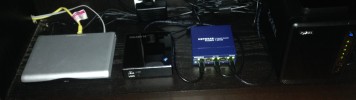
A home lab is a personal infrastructure setup used for learning, experimentation, and running self-hosted services – a miniature data centre in the spare room, under the stairs, or wherever there’s a power socket and a network connection. For anyone interested in systems administration, networking, security, or self-hosting, having a lab to experiment in is invaluable: a place to break things, try new software, and build skills without consequences for production systems.
What Goes In a HomeLab
A typical small home lab might include a repurposed desktop or tower server running a hypervisor like Proxmox or ESXi, hosting virtual machines for various services. A network switch with VLAN support, a managed router (often DD-WRT or OpenWrt flashed), and a NAS for storage are common additions. Services commonly self-hosted include Plex or Jellyfin for media, Pi-hole for network-wide ad blocking, Home Assistant for home automation, Nextcloud for file sync, and various monitoring tools. The Raspberry Pi plays a major role in most home labs – cheap, low-power, and capable of running a wide range of services.
Why Build One
The home lab is fundamentally a learning environment – the best way to understand how enterprise infrastructure works is to build a small version of it at home and operate it yourself. Every problem you solve, every service you configure, and every network issue you debug teaches something that stays with you. It’s also genuinely useful: self-hosted services are more private, more controllable, and often more capable than their cloud equivalents. A home lab is one of the best investments a technically curious person can make.